
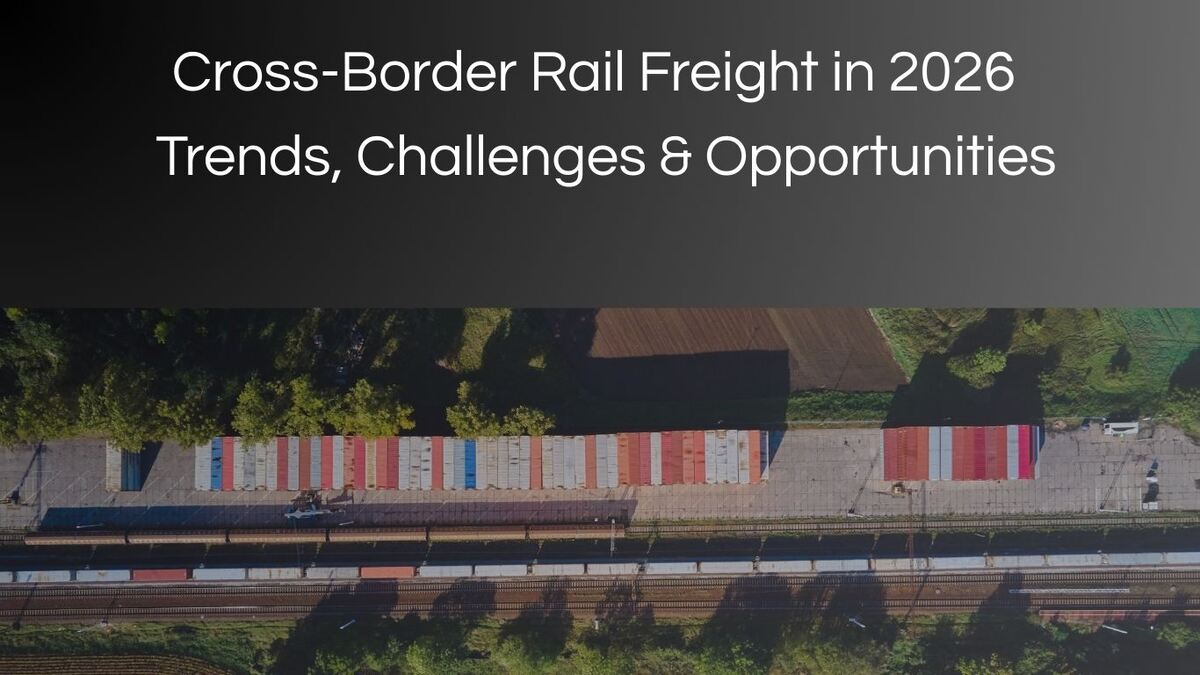
Why Rail Matters for Cross-Border Trade in 2026
1. Strategic Supply Chain Connectivity
Rail networks link major industrial and manufacturing regions across all three countries, enabling shippers to move high-volume freight efficiently across borders. Fewer handoffs compared to road transport make rail especially valuable for long-haul routes and time-sensitive supply chains.
Major rail corridors connect inland production hubs to ports, distribution centers, and international gateways, helping shippers maintain continuity across borders while supporting regional and continental trade.
2. Infrastructure Growth and Border Capacity
Ongoing investments in rail infrastructure continue to improve cross-border capacity in 2026. Expanded rail bridges, upgraded terminals, and improved intermodal facilities are helping reduce congestion and strengthen reliability at key border crossings.
These enhancements are critical as freight volumes grow and supply chains become more interconnected. Strong infrastructure supports smoother handoffs between countries and increases confidence in cross-border rail as a long-term shipping strategy.
3. Operational and Economic Challenges
Despite its advantages, cross-border rail freight is not without challenges:
- Freight volumes vary by commodity, requiring shippers to stay flexible and responsive to market shifts.
- Trade policy changes and tariff discussions can impact cross-border demand and pricing.
- Customs documentation, compliance requirements, and border procedures remain essential to manage accurately, especially for shipments moving into or out of Mexico.
To overcome these challenges, many shippers are focusing on better coordination with carriers, brokers, and logistics partners while improving visibility across their rail networks.
4. Nearshoring and Regional Supply Chain Shifts
Nearshoring continues to influence cross-border freight patterns in 2026. As manufacturers bring production closer to end markets, cross-border rail plays a growing role in connecting facilities across North America.
Rail supports these regional supply chains by offering cost-effective long-haul transport that integrates well with intermodal strategies. Combining rail for distance with trucking for regional distribution allows shippers to balance efficiency, cost, and speed.
Final Thoughts
Cross-border rail freight in 2026 reflects a balance of stability and transformation. While rail remains a dependable foundation for North American trade, success depends on adaptability, strong partnerships, and informed planning.
Shippers that invest in visibility, understand border requirements, and align rail with broader multimodal strategies are well positioned to navigate today’s complex logistics environment. As trade and infrastructure continue to evolve, rail will remain a vital connector across North America’s supply chains.